



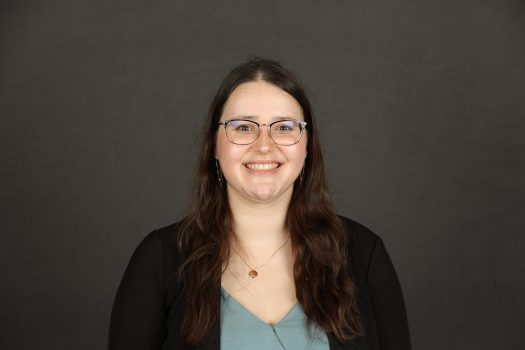
We are very proud to welcome our newest optometrist and team member, Dr. Rachael Campbell, who will be joining Toronto Eye Care effective October 7, 2024. Please join us in extending Dr. Campbell a warm welcome and a successful journey in our Manulife Centre practice.
Dr. Rachael Campbell was born and raised in Toronto, Ontario and is excited to be practicing optometry in her hometown. Dr. Campbell graduated from McMaster University in 2019 with an Honours Bachelor of Life Science. She then pursued her Doctorate of Optometry at the New England College of Optometry (NECO) in Boston, Massachusetts. Additionally, Dr. Campbell has completed externships in Veteran’s Affairs, Community Health, and at the NECO Centre for Eye Care with clinical training in Myopia Control, Specialty Contact Lenses, Low Vision and Binocular Vision.
In order to further her clinical knowledge and expertise, Dr. Campbell completed a residency program in Primary Care optometry with concentrations in Ocular Disease management and Community Health at the DotHouse Community Health Centre in Dorchester, Massachusetts. During this residency, she gained significant firsthand experience diagnosing and treating ocular diseases including infections, Uveitis, Glaucoma and Dry Eye. She also facilitated the implementation of a telemedicine screening program for Diabetic Retinopathy to help improve access to eye care for underprivileged patients in the Dorchester community. Dr. Campbell also supervised optometry students during pediatric vision screenings in local schools, and presented an academic poster at the American Academy of Optometry’s annual meeting on distinguishing Age-Related Macular Degeneration from Pachychoroid Spectrum Disorders.
Dr. Campbell is a member of the Ontario Association of Optometrists and the American Optometric Association. She prides herself on providing comprehensive and compassionate optometric care to all of her patients.
Dr. Campbell is excited to be practicing optometry back home in Toronto and to be able to give back to the community in which she was raised. In her free time she enjoys traveling, reading and spending time with family and friends.
Dr. Campbell is accepting new patients and is looking forward to helping you in our clinic. To book an appointment with Dr. Campbell:
call us at (416) 966-1955 or
email info@torontoeyecare.com to request an appointment
